

Contact Jen to learn about how we can deliver results for you.
Contact Jen to learn about how we can deliver results for you.
Look past paid search to drive ROI
ROI: is there a sweeter acronym in the marketing business? Strategic business decisions are based on ROI. Marketing mixes are determined based on what channels drive the best ROI. And paid search wins a behemoth chunk of many marketing budgets because it can demonstrate ROI.
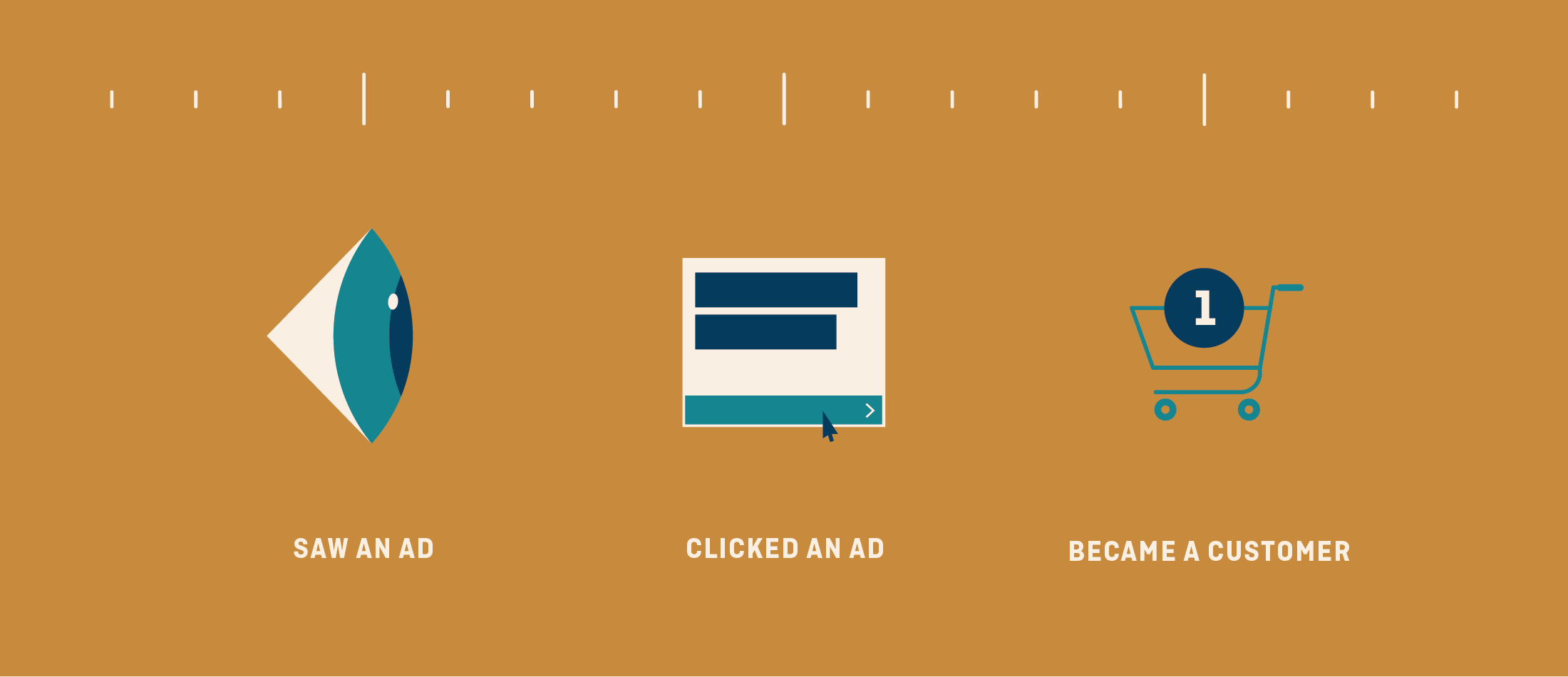
Why do marketers love paid search? Well, it’s the image above. Few tactics can drive such qualified traffic to a website, quickly convert users, and demonstrate ROI like paid search. Paid search makes marketers’ jobs easier: they don’t have to spend a lot of time or money educating on what the product/service is. Paid search can reach users that are so close to a decision, need to be pushed over the edge and convinced, “why *this* brand?”. You can’t get lower in the funnel than paid search.
It makes a lot of sense. And, it works. In most cases, it has demonstrable effects on marketing ROI. So why do anything else?
To answer that question, let’s look at the numbers. Who is your paid search converting? For starters, people who are willing to click a paid search ad. Who is your paid search not converting? That’d be the 85-95% of people who never click your ad. They’re looking for your product, but unless your organic search rankings are killer, they’re probably not finding you. So how do you get to them?
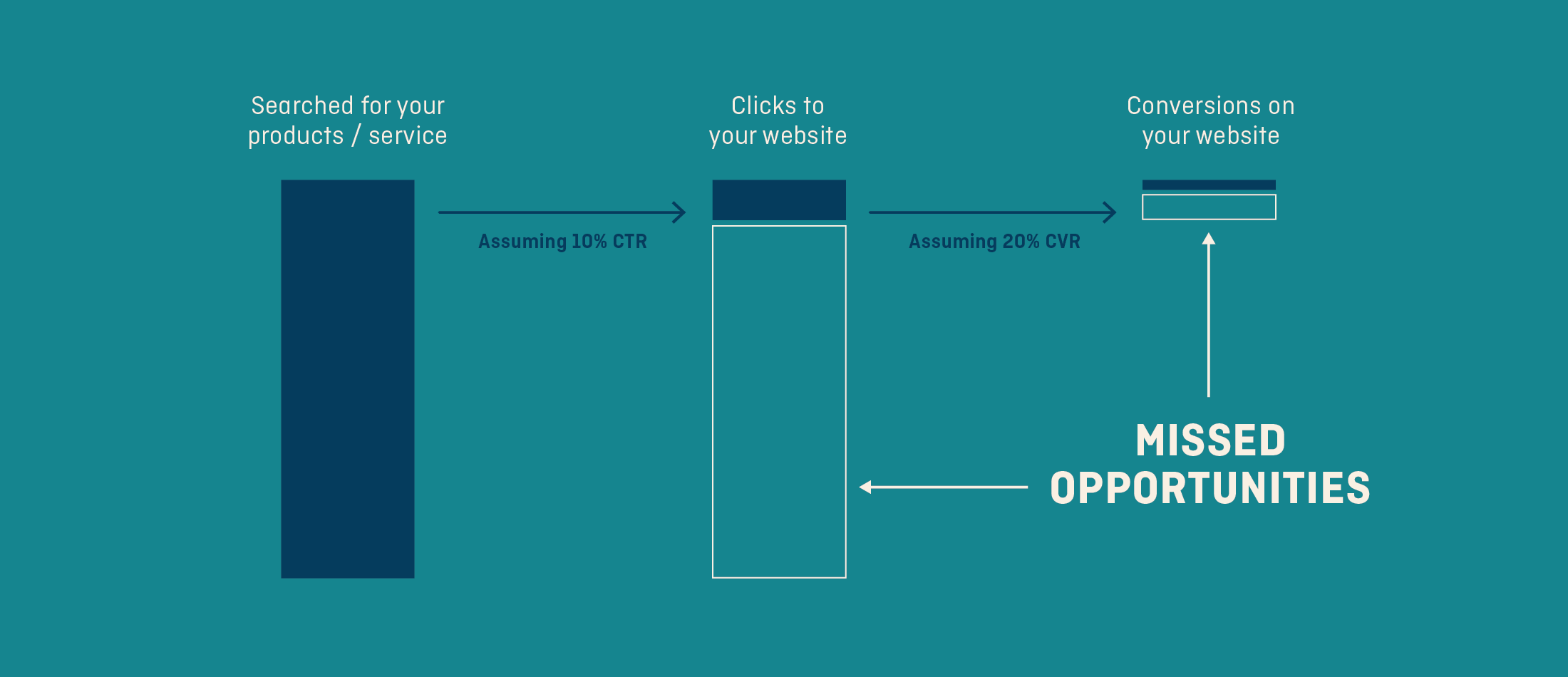
The answer? Use other channels to
reach these missed opportunities. Too often, display and video are left off of conversion-focused plans for being “too high in the conversion funnel” to drive inquiries, leads or purchases.
But humans don’t live in a funnel, and a prospect is a prospect. Not clicking a paid search ad doesn’t make someone less valuable to your business. But they aren’t gone forever - overlaying the wealth of intent data offered by search engines on display or video inventory can reach that 85-95% that aren’t clicking search ads.
In addition to reaching more unique prospects, complementing paid search campaigns with smartly-targeted “higher-funnel” tactics can actually drive stronger paid search performance. Think of it as a halo effect for paid search campaigns.
So consider your media mix – do you have funnel-vision? Are you too focused on tactics that drive immediate ROI that you’ve neglected the larger, upper-funnel audience? Syncing paid search efforts with higher-funnel tactics can both boost organic and paid search volume, reach the “missed opportunities” who don’t click paid search ads, and improve overall ROI. And that’s something we can all get behind.